谷歌翻译
活力中国调研行丨“首”字出圈,厦门构建消费新引力场,活力中国调研行丨“首”字出圈,厦门构建消费新引力场_我的网站

A |
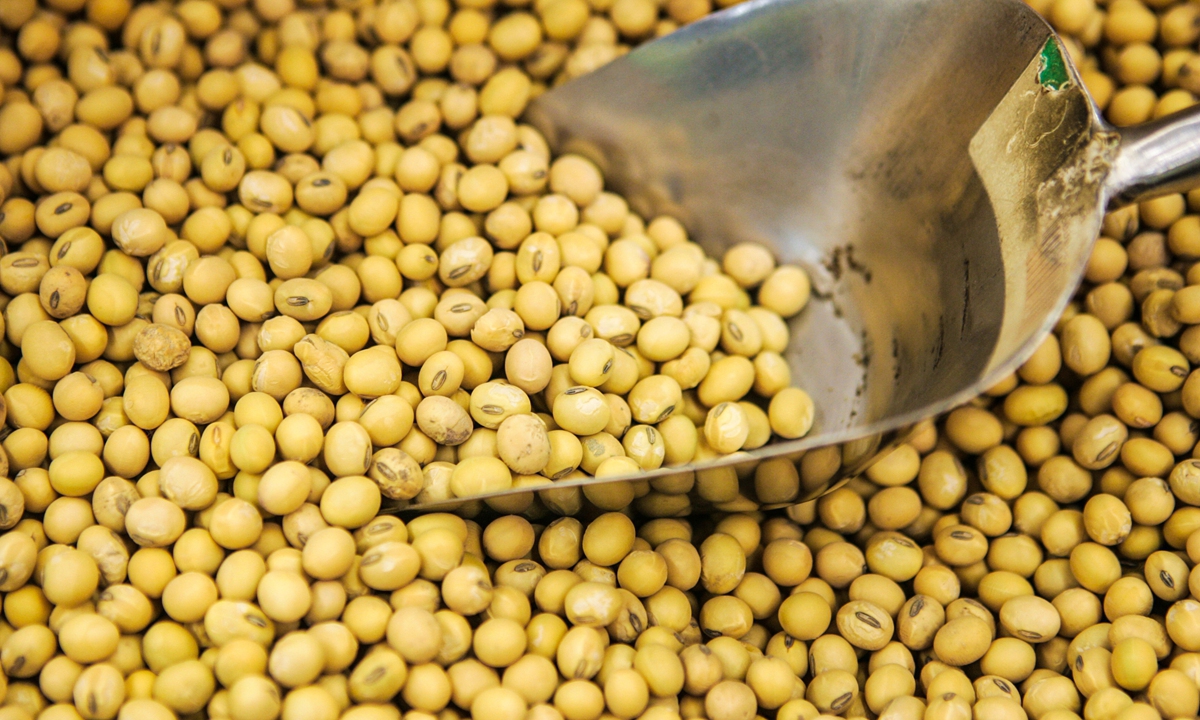
Soybean Photo: VCG
China continues to be the leading destination for Brazilian soybeans, and the Brazilian soybean industry wants to further deepen this relationship, expecting historically high volumes in the coming months, the Brazilian Association of Soybean Growers (Aprosoja Brasil) told the Global Times on Friday.
Brazilian soybean exports to China have remained very strong. China imported 12.08 million tons of soybeans from Brazil in June, up 13.7 percent year-on-year, while imports from the US fell 20.9 percent year-on-year to 1.27 million tons, according to data from the General Administration of Customs.
China imported 34.75 million tons of soybeans from Brazil during the period, up 9.1 percent year-on-year, according to Aprosoja Brasil. "Based on arrivals and customs clearance in China, there was clear growth," the association said.
According to the official data platform Brazilian Comex Stat, which records shipments at origin, 48.32 million metric tons were destined for China from January through June, largely unchanged from 48.41 million metric tons during the same period in 2025.
The difference between the two datasets mainly reflects timing and methodological differences between the recording of departures, cargoes in transit, arrivals and customs clearance.
Aprosoja Brasil said that the broader economic conclusion is the same: "Trade flows remained historically strong, China continued to be the leading destination for Brazilian soybeans, and Brazil's total soybean exports reached a first-half record of 69.57 million metric tons."
For farmers, strong export volumes help support the marketing of the crop, although record exports do not automatically mean record farm margins, said the Brazilian industry association.
China is the world's largest soybean importer. Imported soybeans are mainly used for oil production and animal feed. In terms of trading partners, China mainly imports soybean-related products from Brazil, the US, Argentina, Uruguay and Canada.
Brazil ranks among the world's leading soybean producers and exporters, with China being its largest export market for soybeans, according to the Xinhua News Agency.
Commenting on the significance of the Chinese market, Aprosoja Brasil said "China is absolutely strategic to Brazil's soybean industry," citing data showing that in 2025, China purchased 85.4 million metric tons, representing approximately 79 percent of all Brazilian soybean exports.
The two countries also have a highly complementary trade relationship. For Brazilian farmers, Chinese demand provides scale, market liquidity and greater capacity for long-term planning, said the Brazilian soybean industry association. For China, Brazil offers large, competitive and reliable supplies, as well as a crop calendar that complements production in other supplying countries.
Previously, policy shifts, such as US unilateral tariff measures, have caused disruption for US soybean farmers and other agricultural producers, Lü Xiang, research fellow at the Chinese Academy of Social Sciences, told the Global Times.
At the same time, China has been diversifying imports, including from Brazil and Argentina, to reduce risks from trade uncertainty, according to Lü.
Aprosoja Brasil noted that this partnership should not be seen merely as a temporary consequence of trade disputes involving third countries. Instead, it is a structural and mutually beneficial relationship, based on the complementarity between Brazil's production capacity and China's large demand for food, animal feed and protein, the industry group said.
Looking ahead to the soybean trade for the rest of the year, Aprosoja Brasil said that they are positive, while having a prudent mindset. Brazil has completed the harvest of a record soybean crop of approximately 180.6 million metric tons, and Brazilian soybean exports are expected to reach 116.3 million metric tons in 2026, which would also be a record, the association said.
"Brazil therefore has sufficient supply to continue serving the Chinese market strongly in the coming months... We expect historically high volumes, although not necessarily growth every single month, because soybean trade is seasonal and Northern Hemisphere supplies become more prominent during the second half of the year," it said.
。 首店云集、首秀频频,规模效应、品牌效应聚集了人气,带火了消费。

B | 近日,新华社记者随着“活力中国调研行”采访团,走进福建省厦门市,看“首”字出圈,如何持续激发这一滨海花园城市消费活力。图为福建厦门万象城二期商场。新华社记者 林善传 摄 今年上半年,厦门万象城二期正式投入运营。厦门万象城门店副总经理邓学介绍,商城落地城市首店、特色旗舰店超50家,首店率达43%。 近年来,厦门将发展首发经济作为建设区域性国际消费中心城市、激发消费活力的重要抓手,着力构建“政策引导、载体支撑、场景赋能、服务保障”四位一体的首发经济服务体系,打造国内外知名品牌首发、首秀、首展、首店的集聚地和原创品牌孵化地。 厦门市商务局流通业发展处处长薛航介绍,2025年,厦门市印发促进首发经济高质量发展若干措施,通过优化审批和通关流程降低隐性成本,打造从首店落地到首发首展、再到品牌孵化的完整闭环,全年新增市级及以上品质首店188家,首店能级、业态及区域布局均实现结构性优化。2026年,厦门又印发《厦门市消费新业态新模式新场景试点项目专项资金管理办法(试行)》,对全国性首发活动等实施奖励。

C | 今年上半年,全市新增各类首店超100家。 “围绕零售、餐饮、文化创意等领域,厦门积极引进国内外知名品牌。2026年,SM厦门CHAO街、K11 Select等高品质商业综合体将陆续开业,形成首店集聚‘强磁场’。”薛航说,结合“季季有首发、月月有首秀”的促消费机制,首店带动各商圈能级向上突破,实现客流与销售额增长。

D | “厦门区位优势独特,门店可以直面海内外顾客。”原创金属拼装玩具品牌“酷拼工坊”营运经理谢颖尚表示,自5月开业以来,“酷拼工坊”厦门首店的月销量达数千件。顾客在福建厦门万象城二期一家品牌的福建首店进行体验。新华社记者 林善传 摄 “首发落地既是品牌对厦门城市消费力、影响力的认可,也加速了厦门的消费创新和商业品质提升。”薛航说,首店覆盖餐饮、零售、便民服务等多领域,优化商业业态结构,“在做大首店数量、提升首店能级的同时,厦门推动消费从商品消费向服务消费、体验消费、品质消费延伸,不断拓展消费新场景,满足不同消费群体需求”。(记者邰晓安、秦宏) 来源:新华社。
Current article:http://et75a.bianneixuanbingqinyouxie.buzz/news/20260826_1788.html
Published on:16:45:50